Understanding Fake and Spoofed Mobile Numbers in Pakistan
Pakistan's mobile landscape is increasingly targeted by sophisticated phone fraud schemes involving fake mobile numbers, caller ID spoofing, and VoIP-generated numbers that masquerade as legitimate Pakistani SIM registrations. With over 190 million mobile subscribers and widespread adoption of mobile banking services like JazzCash, EasyPaisa, and internet banking, the stakes of falling for a fake number scam have never been higher. This comprehensive fake number checker guide explains how spoofed numbers work, how to identify them, and what legal recourse is available to victims in Pakistan.
What Are Fake and Spoofed Numbers?
In the context of Pakistani telecom fraud, "fake numbers" broadly fall into three categories:
- Spoofed Numbers: Real Pakistani mobile numbers that have been "borrowed" and displayed on the recipient's caller ID without the actual owner's knowledge. The caller uses software to transmit a different number than their real one.
- VoIP-Generated Numbers: Virtual phone numbers created through internet-based calling applications like TextNow, Google Voice, Hushed, Burner, or local Pakistani VoIP providers. These numbers look like mobile numbers but are not registered SIM cards.
- Unregistered or Ghost SIMs: Physical SIM cards that were issued before Pakistan's 2012 mandatory biometric registration drive and never linked to a CNIC. These numbers exist in the network but have no registered owner in the PTA/NADRA database.
How Caller ID Spoofing Works
Caller ID spoofing exploits a fundamental vulnerability in the global SS7 (Signalling System No. 7) telephone signaling protocol — the system that routes calls between networks worldwide. Here is the technical breakdown:
- The fraudster uses a VoIP service or spoofing app (e.g., SpoofCard, TextNow, Twilio-based scripts) that allows custom caller ID configuration.
- Before making a call, they input any phone number they want to display — often a real Pakistani number, a bank's customer service number, or a government department line.
- When the call connects to the victim, their phone displays the spoofed number rather than the actual calling number.
- The victim, trusting the familiar or official-looking number, answers and may share OTPs, passwords, or personal information.
Modern Pakistani banks have implemented call-back verification systems to combat this, but many individual users remain vulnerable. The key defense is awareness: no legitimate bank, government agency, or telecom operator will call you asking for your PIN, OTP, or account password.
How Scammers Use Fake Pakistani Numbers
Common fraud scenarios targeting Pakistani mobile users with fake numbers include:
- Bank Impersonation Fraud: Scammers spoof Meezan Bank, HBL, or UBL helpline numbers and call customers claiming their account is suspended or compromised, then request account credentials.
- JazzCash/EasyPaisa OTP Scams: Fraudsters pose as mobile wallet customer service agents, claim there's a problem with the wallet, and request the OTP sent to the victim's number.
- Government Impersonation: Fake FBR, NADRA, or FIA officials calling to claim outstanding taxes, legal notices, or CNIC issues — demanding immediate payment to avoid arrest.
- OLX/Daraz Purchase Scams: Buyers on classified platforms use fake numbers to pose as interested customers, then send fake payment confirmations and request goods without actual payment.
- International Remittance Fraud: Targeting overseas Pakistanis, scammers use fake Pakistani numbers to impersonate distressed relatives requesting emergency money transfers.
How to Identify a Fake or Spoofed Number
While no method is 100% foolproof, these techniques will help you identify potentially fake numbers before engaging with unknown callers:
1. Check via SimOwner Lookup (PTA Database)
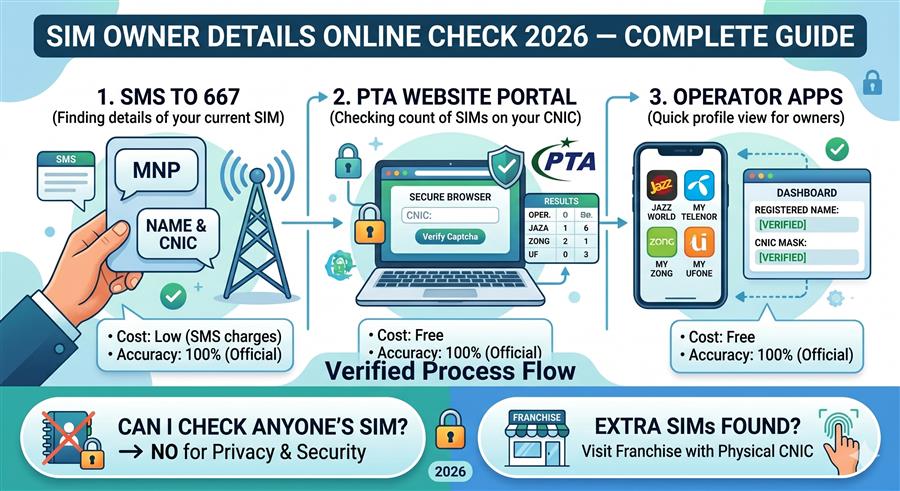
The most reliable method is to search the number through our SIM owner details tool. Genuine Pakistani SIM cards registered through biometric verification will return owner data. VoIP numbers, spoofed numbers routing through foreign servers, and unregistered SIMs will return no results or show as unverified. This is the first and most important check.
2. Verify the Number Prefix Against Pakistani Operators
All legitimate Pakistani mobile numbers follow strict prefix assignments by PTA:
| Operator | Valid Prefixes |
|---|---|
| Jazz (Mobilink) | 0300, 0301, 0302, 0303, 0304, 0305, 0306, 0307, 0308, 0309 |
| Zong (CMPAK) | 0310, 0311, 0312, 0313, 0314, 0315, 0316, 0317, 0318, 0319 |
| Ufone (PTCL) | 0330, 0331, 0332, 0333, 0334, 0335, 0336, 0337, 0338, 0339 |
| Telenor | 0340, 0341, 0342, 0343, 0344, 0345, 0346, 0347, 0348, 0349 |
| SCOM (SCO) | 0855, 0856, 0857, 0858 |
Any number with a prefix outside these ranges claiming to be a Pakistani mobile number is almost certainly a VoIP or spoofed number.
3. Signs a Number Might Be Fake or Spoofed
- The number has an unusual prefix not matching any Pakistani operator's range.
- The caller refuses to call back or hangs up when you say you'll call them back on the official number.
- The number appears on WhatsApp without a profile picture and was recently created.
- A reverse search returns no social media profiles, business listings, or online presence.
- The SimOwner lookup returns no registered owner despite the number appearing active.
- The call has noticeably higher audio latency or VoIP-typical compression artifacts.
How VoIP Numbers Differ from Registered SIM Numbers
Understanding this distinction is fundamental to fake number detection:
| Feature | Real Pakistani SIM | VoIP/Fake Number |
|---|---|---|
| CNIC Registration | Mandatory biometric registration | No CNIC required |
| PTA Database | Appears in PTA records | No PTA record |
| SimOwner Lookup | Returns owner details | No data returned |
| Physical SIM Card | Physical SIM exists | Software-only, no physical SIM |
| Location Trace | Traceable to cell tower | Routes via internet servers |
| SMS to 668 | Appears in CNIC SIM count | Not counted |
| Cost | Purchased at franchise | Free or minimal online cost |
What to Do If You Receive a Call from a Spoofed Number
- Hang up immediately if you suspect spoofing — do not share any information.
- Block the displayed number on your phone to prevent further calls.
- Verify the claimed identity independently — if someone claims to be from your bank, call the bank's official number (printed on your card) directly.
- Report to PTA via complaints.pta.gov.pk or call 0800-55055.
- File an FIA complaint at complaint.fia.gov.pk or call cybercrime helpline 9911 if financial fraud occurred.
- Alert your contacts if your own number was spoofed — let people in your phonebook know your number may have been used without your knowledge.
Legal Consequences Under Pakistan's PECA 2016
Pakistan's digital crime legislation treats fake number usage for fraud very seriously. The key legal provisions include:
- Section 20 — Identity Impersonation: Using fake credentials (including spoofed numbers) to impersonate another person or institution online carries up to 3 years imprisonment and Rs. 5 million fine.
- Section 21 — Spamming: Mass-calling using automated systems and fake numbers for fraudulent purposes attracts up to 3 months imprisonment or Rs. 1 million fine per offense.
- Section 29 — Unauthorized Interception: Intercepting communications or impersonating telecom infrastructure carries up to 7 years imprisonment.
- Pakistan Telecommunication Act: Operating unauthorized telecom equipment (including illegal VoIP gateways) for commercial spoofing services carries up to 3 years imprisonment and equipment forfeiture.