📋 Table of Contents
- What Is Pak SIM Data?
- What Data Is Collected During SIM Registration
- Categories of SIM Data in Detail
- Why This Data Exists: The Purpose Behind Registration
- Who Stores the Data?
- Who Can Access Pak SIM Data?
- How SIM Data Is Used in Practice
- Data Retention: How Long Is It Kept?
- Privacy Concerns & Citizen Rights
- Protecting Your SIM Data
- Frequently Asked Questions
What Is Pak SIM Data?
"Pak SIM Data" refers to the comprehensive set of registration information that Pakistan's telecom ecosystem collects, stores, and maintains for every active mobile SIM card in the country. This data is the backbone of Pakistan's mobile identity infrastructure — a nationwide digital record linking every active phone number to a specific, biometrically verified individual. It encompasses everything from the subscriber's full legal name and CNIC number to their registered address, network operator, activation date, and biometric verification status.
Pakistan currently has over 190 million active mobile subscribers. Each of these subscribers has a corresponding SIM data record maintained by their telecom operator and cross-referenced with PTA's central SIM registry and NADRA's identity database. Together, these interconnected records form one of the most comprehensive mobile identity datasets of any developing country — a system that enables both robust security measures and rapid fraud response.
Understanding what Pak SIM data includes, why it is collected, and how it is used is important for every Pakistani citizen. It helps you make informed decisions about your mobile privacy, understand your rights, and know how to check and protect the data associated with your own mobile numbers. You can access publicly available SIM registration information through our Pak SIM Data tool or look up specific number details through our SIM Owner Details page.
What Data Is Collected During SIM Registration
When you purchase and register a SIM card in Pakistan, multiple categories of data are captured simultaneously. This is not a simple name-and-number registration — it is a comprehensive identity verification and record-creation process. Here is a complete breakdown of what is collected:
- Full legal name (as per NADRA records)
- 13-digit CNIC number
- Date of birth
- Gender
- Father's/husband's name
- Registered home address
- City and district
- Province
- Point of sale location
- Mobile number (MSISDN)
- SIM card serial number (ICCID)
- Network operator name
- Activation date and time
- SIM type (prepaid/postpaid)
- Fingerprint template (encrypted)
- NADRA verification status
- Verification timestamp
- Biometric device ID
It is important to note that biometric data (fingerprint templates) is the most sensitive category and is stored with the highest level of security. It is not shared publicly or made available through any citizen-facing lookup service. Publicly accessible SIM data — such as what appears on platforms like SimOwner — is limited to non-sensitive identity fields: registered name, network, and partial CNIC information.
Categories of SIM Data in Detail
Let's examine each category of Pak SIM data in greater depth to understand exactly what is captured and why:
Full Legal Name: The subscriber's complete name as it appears on their CNIC, including any middle names or suffixes. This ensures that verification results can be matched against identity documents provided in other contexts — a bank form, a rental agreement, a job application. The name must exactly match the NADRA record; discrepancies cause biometric verification to fail.
CNIC Number: The 13-digit Computerized National Identity Card number is the primary unique identifier linking SIM records to an individual's national identity profile. This number encodes information including the person's province of registration, family number, and individual sequence within their family record. The full CNIC is stored in the telecom operator's secure database and PTA's registry but is not publicly disclosed in full — lookup tools typically show only a partially masked version for privacy protection.
Registered Address: The home address associated with the CNIC at the time of registration. This may differ from the subscriber's current residence if they have moved since obtaining their CNIC. Many Pakistanis note that their CNIC address reflects their family's ancestral hometown rather than their current place of residence — an important consideration when interpreting address data from SIM verification results.
Mobile Number (MSISDN): The actual mobile number that the SIM card is assigned. In Pakistan, mobile numbers follow the format 03XX-XXXXXXX, with the first four digits indicating the network operator and regional allocation. The number is assigned by the telecom operator at the time of SIM activation and remains associated with the registered owner's CNIC for the life of that SIM.
SIM Card Serial Number (ICCID): Every physical SIM card has a unique 19-20 digit International Circuit Card Identifier (ICCID) printed on it. This serial number links the physical card to the software registration record. If a SIM card is reported lost or stolen, the ICCID enables the telecom operator to block the specific physical card while allowing the subscriber to obtain a replacement SIM with the same number.
Network Operator: Which of Pakistan's five major networks (Jazz, Telenor, Zong, Ufone, SCO) issued and manages the SIM card. This information is directly derivable from the mobile number prefix (e.g., 0300-0307 are Jazz numbers) but is also explicitly stored in the registration record.
Why This Data Exists: The Purpose Behind Registration
Pakistan's comprehensive SIM data collection system was not built overnight — it evolved in response to serious national security concerns and telecom sector challenges. The most pivotal catalyst was the recognition in the early 2010s that anonymous SIM cards were being actively used to coordinate terrorist activities, plan attacks, and conduct extortion operations. The ability to trace any mobile number to a verified individual became a critical law enforcement capability.
Beyond security, the system serves equally important economic and social purposes. Financial inclusion has been dramatically accelerated by mobile banking, which requires verified mobile identities to function. JazzCash and EasyPaisa — which collectively serve tens of millions of users — can only safely operate because every mobile number is tied to a verified CNIC, enabling accountability in digital financial transactions.
Consumer protection is another key purpose. By maintaining a verified database of SIM ownership, PTA can investigate complaints of unauthorized SIM issuance, SIM swap fraud, and network misuse more effectively. Citizens benefit from having a legal framework and verifiable data trail that supports their complaints and enables operators to take remedial action. Our SIM ownership resources help citizens understand and exercise these protections.
Revenue assurance for telecom operators also benefits from robust registration data. Accurate subscriber records enable operators to provide targeted services, manage billing disputes, and comply with regulatory reporting requirements. The data also supports law enforcement requests for records in connection with legitimate investigations, reducing the administrative burden on operators when responding to legal process.
Who Stores the Data?
Pak SIM data is stored across multiple interconnected institutions, each holding different components of the complete dataset:
Stores biometric templates, CNIC records, and identity verification results. The authoritative source for identity data.
Maintain complete subscriber records including SIM technical data, registration history, and account details for their own network.
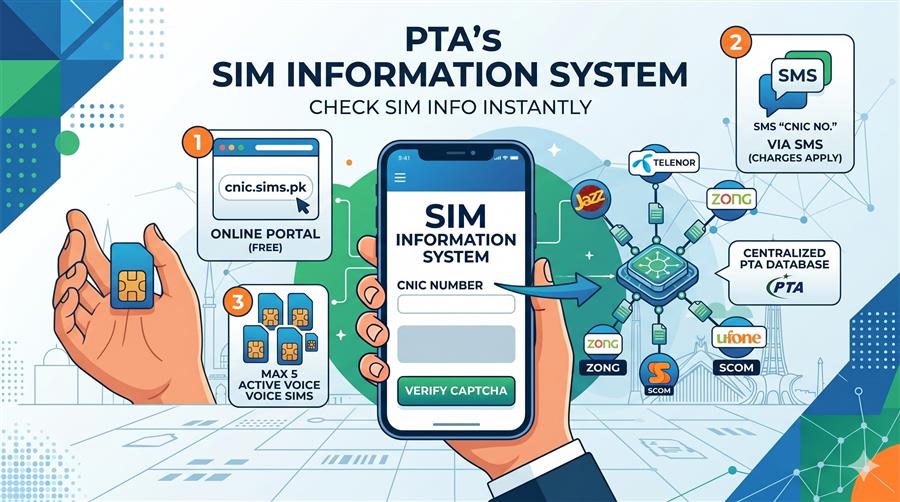
Maintains a cross-network SIM registry enabling queries across all operators and enforcing regulatory limits.
Each institution operates under different security and access standards. NADRA's biometric data is stored in highly secure, air-gapped systems with restricted access. Telecom operator databases are subject to PTA cybersecurity regulations and must undergo regular security audits. PTA's central registry is accessible to authorized users within the telecom regulatory framework.
Who Can Access Pak SIM Data?
Access to Pak SIM data varies significantly depending on the category of data and the identity of the requester. Here is a clear breakdown of access levels:
General Public (Limited Access): Citizens can access basic SIM registration information — registered owner's name, network operator, and registration status — through official PTA channels (SMS to 668 for their own CNIC) and authorized third-party platforms. Full CNIC numbers, addresses, and biometric data are never publicly accessible. Our SIM search tool provides the appropriate level of publicly available information.
Businesses (Authorized Access): Companies with legitimate KYC requirements can apply to PTA and telecom operators for API access to SIM verification services. This allows them to perform automated identity checks during customer onboarding. Access is governed by data sharing agreements that specify the permissible uses of the data and data security requirements.
Law Enforcement (Legal Process): Police, FIA, intelligence services, and other authorized government agencies can request full SIM data — including subscriber identity details, call records, and location history — through legal process (court orders, government directives under applicable laws). These requests are handled through designated Law Enforcement Agency (LEA) interfaces maintained by each telecom operator.
Regulatory Bodies: PTA itself, and to a limited extent other regulators like SBP and SECP for specific purposes, has access to the SIM registry data for regulatory oversight, compliance monitoring, and policy development purposes.
How SIM Data Is Used in Practice
Pak SIM data serves an enormous variety of purposes in daily Pakistani life, most of which citizens benefit from directly even if they are not aware of the underlying data flows. Here are the most significant practical applications:
Mobile Banking & Fintech: When you open a JazzCash or EasyPaisa account, the mobile wallet platform verifies that your mobile number is registered against your CNIC in the SIM database. This verification is repeated periodically to detect SIM swaps. Every OTP you receive for banking authentication relies on the assumption that your mobile number is in your control, which SIM registration data helps establish.
Government Services: Pakistan's digital government services — including NADRA's online CNIC applications, tax filing through FBR's IRIS system, and SECP's company registration portal — increasingly use mobile number verification as a second factor of authentication. Your registered mobile number essentially serves as a digital identity anchor for government service access.
Fraud Investigations: When mobile fraud occurs, telecom operators' Law Enforcement interfaces provide authorized agencies with subscriber data, call records, and location history necessary to identify and prosecute perpetrators. The completeness and accuracy of SIM registration data directly determines how quickly fraud cases can be resolved. Visit our SIM Information page for more on how verification data supports fraud response.
Network Management: Telecom operators use anonymized and aggregated SIM data for network planning — understanding subscriber density in different areas guides decisions about where to build new cell towers, expand capacity, or improve coverage. This data-driven approach to infrastructure investment benefits all subscribers through improved network quality.
Data Retention: How Long Is It Kept?
PTA regulations require telecom operators to retain subscriber registration data for a minimum period after SIM deactivation. Currently, this period is at least one year post-deactivation for most categories of subscriber data, and longer for specific categories like call detail records (CDRs) which must be retained for at least 12 months under PTA's lawful interception and data retention directives.
NADRA's biometric records are retained indefinitely as part of the national identity registry — they form the permanent backbone of Pakistan's civil identity infrastructure. The link between a CNIC and its associated biometric data persists throughout the identity holder's lifetime and beyond (NADRA maintains death records that flag deceased CNIC holders).
After a SIM is deactivated and the minimum retention period has passed, the mobile number may be reassigned to a new subscriber. This recycling of mobile numbers is a common practice across all telecom operators and creates important considerations: a mobile number you once used could now be registered to a completely different person. This is why SIM verification should always be treated as a check of current registration status rather than a permanent identity link.
Privacy Concerns & Citizen Rights
Pakistan's SIM registration system represents a significant aggregation of personal data, and the privacy implications deserve serious consideration. While the system serves important security and economic purposes, it also creates risks that citizens should be aware of and that policymakers must address.
The surveillance concern: A system that links every mobile number to a verified identity and maintains call records creates a potential infrastructure for mass surveillance. Civil society organizations in Pakistan have raised concerns about the extent to which security agencies access SIM data without adequate judicial oversight or transparency about the volume and nature of such access. Advocates call for clearer legal standards governing government access to telecom subscriber data.
Data breach risks: Large centralized databases are attractive targets for cybercriminals. Telecom operator databases in Pakistan have been targeted by hackers in the past, resulting in subscriber data being exposed. Pakistan's Personal Data Protection Bill (PDPB), still under legislative consideration as of 2026, would introduce mandatory breach notification requirements and stronger data security standards for organizations holding personal data — including SIM registration records.
Citizen rights under current law: Even in the absence of comprehensive data protection legislation, Pakistani citizens have some rights regarding their SIM data. You have the right to: know which SIMs are registered against your CNIC (via PTA's 668 service); request correction of incorrect data through your telecom operator; file complaints about unauthorized SIM registration with PTA; and request information about how your data is being used in specific contexts. Familiarize yourself with these rights and use our CNIC SIM Check tool to exercise them.
Protecting Your SIM Data
While you cannot opt out of the SIM registration system (it is mandatory under Pakistani law for all SIM users), you can take several steps to minimize your exposure and detect misuse of your data quickly. Here is a practical protection plan:
Regular CNIC SIM audits: Send your CNIC to 668 every 2-3 months to verify that only authorized SIM cards are registered against your identity. This is your most powerful early-warning mechanism against SIM fraud. Set a phone reminder to do this quarterly.
Protect your CNIC photocopies: Every time you share a photocopy of your CNIC, you create a potential avenue for SIM fraud. Consider writing the purpose on photocopies ("For XYZ bank KYC — June 2026") and keeping a log of where you have shared CNIC copies. Shred old CNIC copies that you are discarding.
Enable SIM PIN protection: All major Pakistani networks support SIM card PIN protection. Enabling a PIN means that even if someone physically steals your SIM, they cannot use it without the PIN. Set a strong PIN (not 1234 or your birth year) and keep it secret.
Register for MyPTA: Create an account on PTA's MyPTA portal to access more detailed information about your registered SIMs and receive notifications about changes. This adds an additional monitoring layer beyond the periodic SMS check.
Be alert to OTP anomalies: If you receive unexpected OTP messages from your bank or mobile wallet, do not ignore them — someone may be attempting to access your account. Immediately check your registered SIMs via 668 and contact your bank if you suspect unauthorized access attempts. For more security tips, visit our SimOwner blog.
Frequently Asked Questions
What personal information is publicly visible in Pakistan's SIM database?
Publicly accessible SIM data is limited to non-sensitive fields: the registered owner's name, mobile network operator, and registration status. Sensitive data like the full CNIC number, complete home address, and biometric information is never made publicly accessible. Platforms like SimOwner follow this principle strictly, returning only appropriately limited information.
Can the government track my location using SIM registration data?
SIM registration data itself does not include real-time location. However, mobile networks continuously generate location data (cell tower connections) as part of normal network operations. This location data, combined with subscriber records, can be used by law enforcement with appropriate legal authorization to establish a subscriber's historical location. The legal standards for such access in Pakistan are defined under the Pakistan Telecommunication Act and applicable surveillance laws.
What happens to my SIM data when I deactivate my SIM?
Your subscriber registration data is retained by the telecom operator for a minimum period (typically 12 months) after deactivation, as required by PTA regulations. After this retention period, the data may be archived or deleted in accordance with the operator's data retention policies. Your mobile number may be reassigned to a new subscriber after deactivation, which will create new registration records linked to the new owner's CNIC.
Is my biometric data (fingerprint) stored in the SIM database?
A fingerprint template (not the actual fingerprint image) is captured during SIM registration and used for real-time NADRA verification. NADRA stores biometric templates as part of the national identity registry. Telecom operators do not retain the fingerprint template themselves — they only receive the verification result (pass/fail) from NADRA and store this result, not the biometric data itself.
Can I request to see all data stored about me in the SIM system?
You can check your registered SIMs via the PTA 668 SMS service and the MyPTA portal. For more detailed information about the specific data held by a telecom operator, you can write to the operator's data protection officer (a role being formalized under Pakistan's upcoming data protection legislation). Full disclosure rights will be strengthened when the Personal Data Protection Bill becomes law.
Has Pakistan ever experienced a major SIM data breach?
There have been reported instances of telecom subscriber data being accessed or exposed through cyberattacks or insider misuse in Pakistan. These incidents have included unauthorized disclosure of subscriber details from operator databases. PTA has responded by tightening cybersecurity requirements for operators. The proposed Personal Data Protection Bill would introduce mandatory breach notification, requiring operators to publicly disclose significant data breaches — a transparency measure currently not legally mandated.
Access Pak SIM Data Responsibly
Use SimOwner's tools to look up SIM registration data for fraud prevention, identity verification, and personal security — all with full respect for privacy.